


MB-326H (THE MACCHI)
The MB-326H introduced a new era of jet-powered training for the Royal Australian Air Force (RAAF). Fast, reliable and purpose-built for pilot development, it became the backbone of advanced flight instruction across Australia from the late 1960s to the early 2000s.
Thousands of RAAF aircrew sharpened their skills in its tandem cockpit to learn the fundamentals of military jet operations. Now preserved at the Aviation Heritage Museum, the Macchi MB-326H remains a striking symbol of Cold War readiness and the technical precision of a generation trained to fly fast.
The Story Behind the MB-326H (the Macchi) Aircraft
The Aermacchi MB-326H was born from an Italian vision to create a jet trainer that could prepare pilots for the modern age of high-speed aviation. First flown in 1957, the original MB-326 was designed by the legendary Ermanno Bazzocchi at Aermacchi with a focus on simplicity, durability and versatility. It featured a straight-wing configuration, tandem seating and was powered by the dependable Viper turbojet — making it easy to fly but responsive enough to challenge student pilots as they progressed.
The MB-326H was developed specifically for the Royal Australian Air Force, combining the proven Italian airframe with locally upgraded avionics to meet Australia’s training needs. Aermacchi built the first 12 units, while the Commonwealth Aircraft Corporation completed the rest through licensed production, including 18 assembled from kits and 67 built entirely in Australia.
MB-326H Role in RAAF Service and in Australia
The MB-326H Macchi became a defining platform for Royal Australian Air Force pilot training after its introduction in the late 1960s. Selected for its balance of reliability and agility, it gave student pilots their first hands-on experience with a jet-powered aircraft. The tandem-seat configuration allowed instructors to guide cadets through advanced manoeuvres, tactical procedures and formation flying.
RAAF Base Pearce in Western Australia served as a primary hub for MB-326H operations, particularly through No. 2 Flying Training School (2FTS). Macchis were also flown by operational conversion units and reserve squadrons such as No. 25 (City of Perth) Squadron. Beyond training, the aircraft took on light attack and close air support roles, thanks to its hardpoints and weapons capability. The Roulettes, the RAAF’s aerobatic display team, also flew the MB-326H in public performances across the country.
The MB-326H RAAF story stretched into the early 2000s, when changes in pilot training strategy and evolving defence requirements signalled the end of its service. The question of what would replace the Macchi led to the introduction of the Hawk 127 — a jet built for the next generation.
MB-326H Aermacchi Performance
The Aermacchi MB-326H performance profile made it an ideal platform for fast-jet training in Australia. Its Rolls-Royce Viper turbojet delivered smooth throttle response and a strong power-to-weight ratio, giving student pilots the feel of a lightweight fighter while remaining predictable enough for instruction. The aircraft could reach speeds of up to 806 km/h and climb to 12,500 metres, numbers that placed it among the most capable trainer jets of its era.
With a range of about 1,665 kilometres, the Macchi supported long-duration training missions across WA airspace. Its stability at low speeds, tight turning circle and crisp roll rate gave instructors confidence to teach formation flying, aerobatics and tactical manoeuvres. The Raemacchi MB-326H speed was only part of the story.
Key Specifications & Technical Details of the Aermacchi MB-326H
The MB-326H combined clean Italian design with Australian-built robustness to create a reliable and efficient jet trainer for generations of RAAF pilots. The key Aermacchi MB-326H specifications are:
- Status: On display
- Type: Two-seat basic trainer
- Maiden Flight: December 10, 1957
- Primary users: Italian, Brazilian, Australian and South African air forces all operated about 100 or more each
- Length: 10.65 m (34 ft 11 in)
- Wingspan: 10.56 m (34 ft 8 in)
- Height: 3.72 m (12 ft 2½ in)
- Empty Weight: 2,237 kg (4,930 lb)
- Loaded Weight: 3,765 kg (8,300 lb)
- Engine: Rolls-Royce Viper Mk.11 turbojet, 11.1 kN (licensed from Bristol Siddeley)
- Max Speed: 806 km/h (501 mph)
- Range: 1,665 km (1,035 miles)
- Service Ceiling: 12,500 m (41,000 ft)
What Superseded the Macchi
The question of what superseded the Macchi was answered in the early 2000s when the RAAF introduced the BAE Hawk 127. Designed for modern fast-jet training, the Hawk brought digital avionics, advanced weapons simulation and far greater thrust, marking a major step forward in capability.
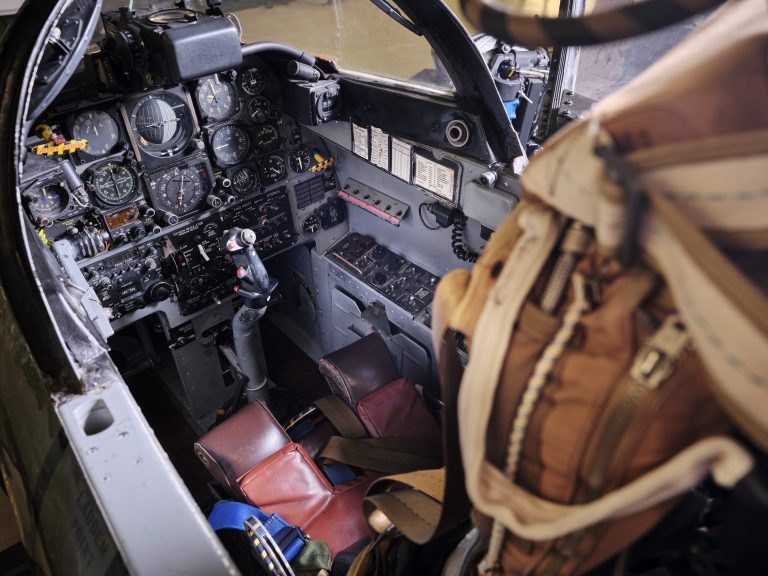
Compared to the MB‑326H, the Hawk offered a glass cockpit, radar emulation and performance that pushed into transonic territory. It also aligned Australia with NATO-standard training systems, giving pilots experience that matched the technology found in frontline fighters like the F/A‑18. This shift set a new benchmark for advanced training and prepared RAAF aircrew for the demands of modern combat aircraft.
The broader restructure of pilot training soon followed. The PC‑21 became the primary basic trainer, while the Hawk 127 took on the advanced role. So when analysing what superseded the RAAF Macchi, we must remember that this aircraft remains a proud predecessor in the RAAF’s jet training evolution and is remembered fondly by all those who flew it.
Visit and Explore the MB‑326H Exhibit
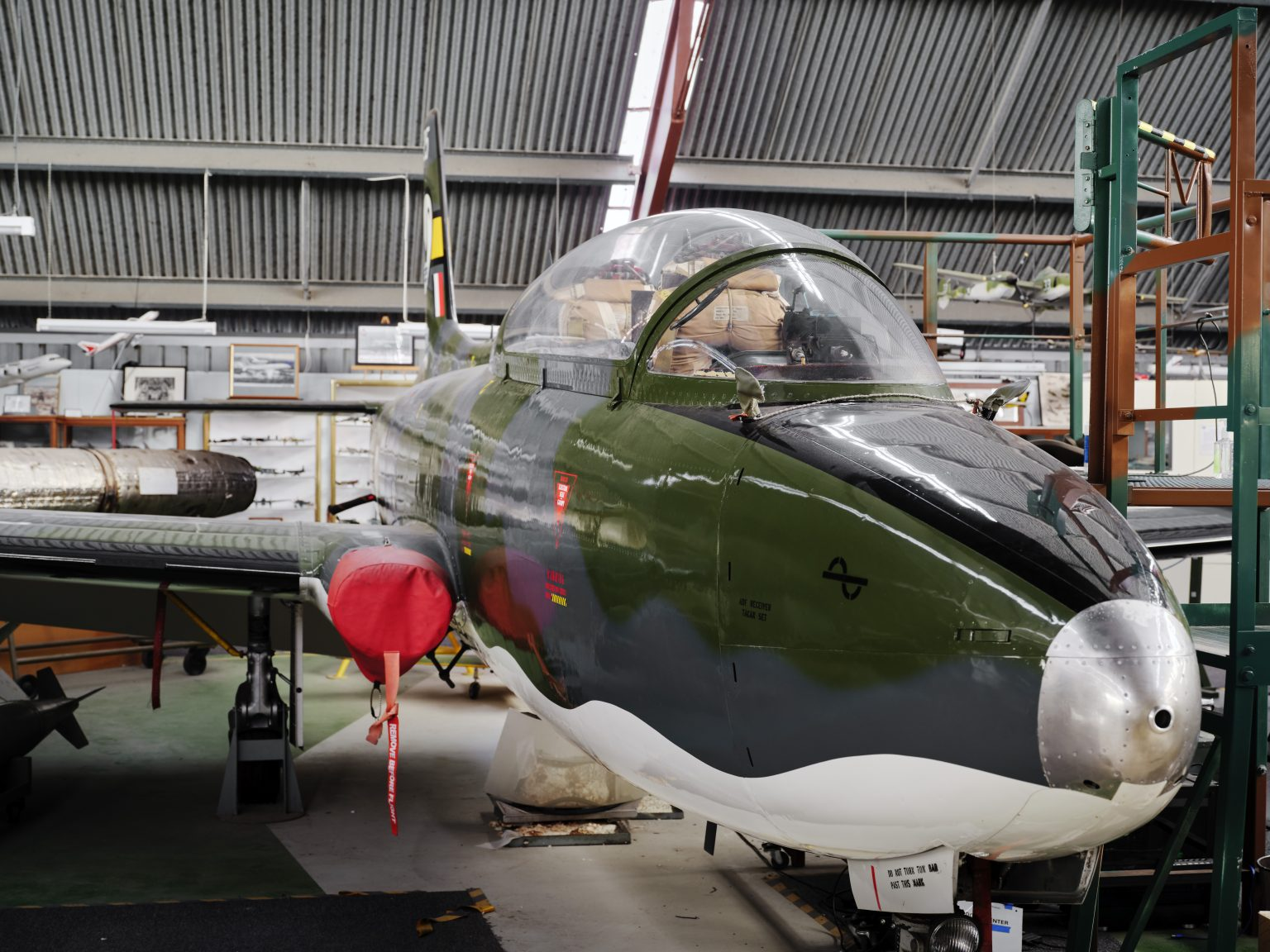
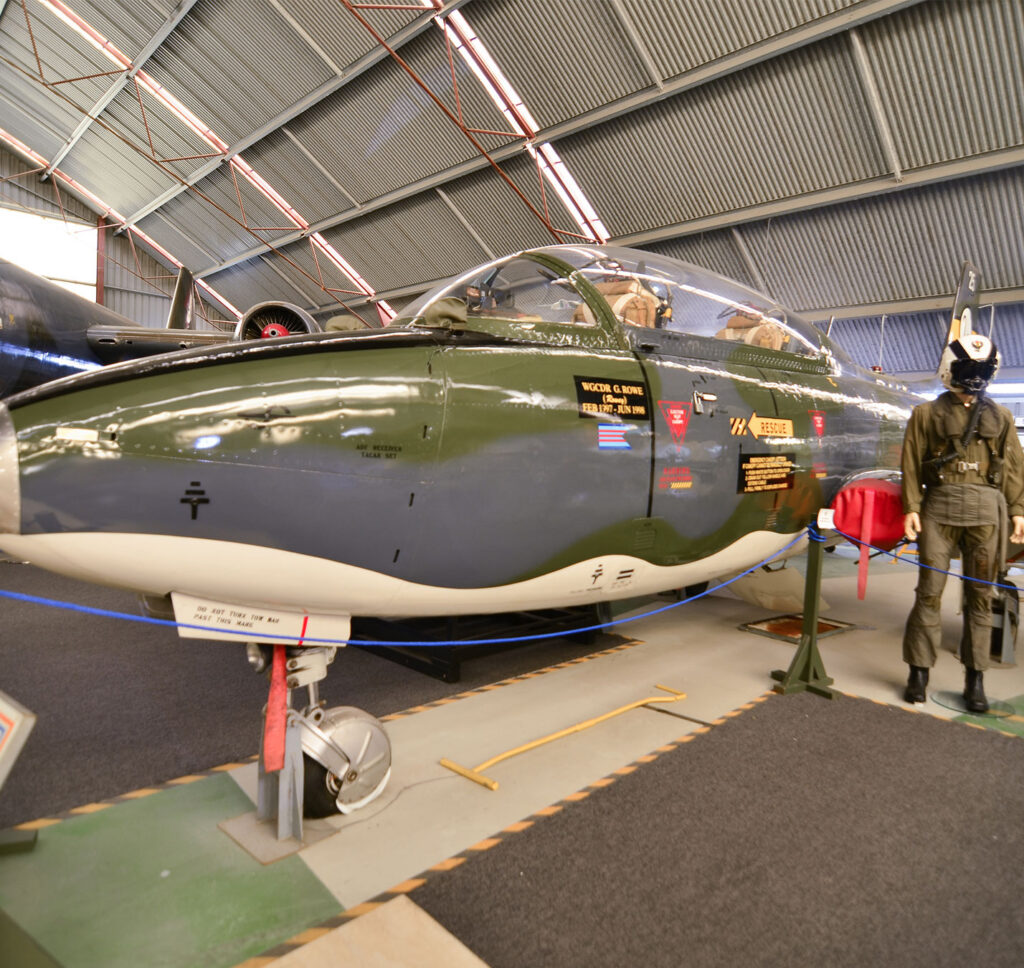
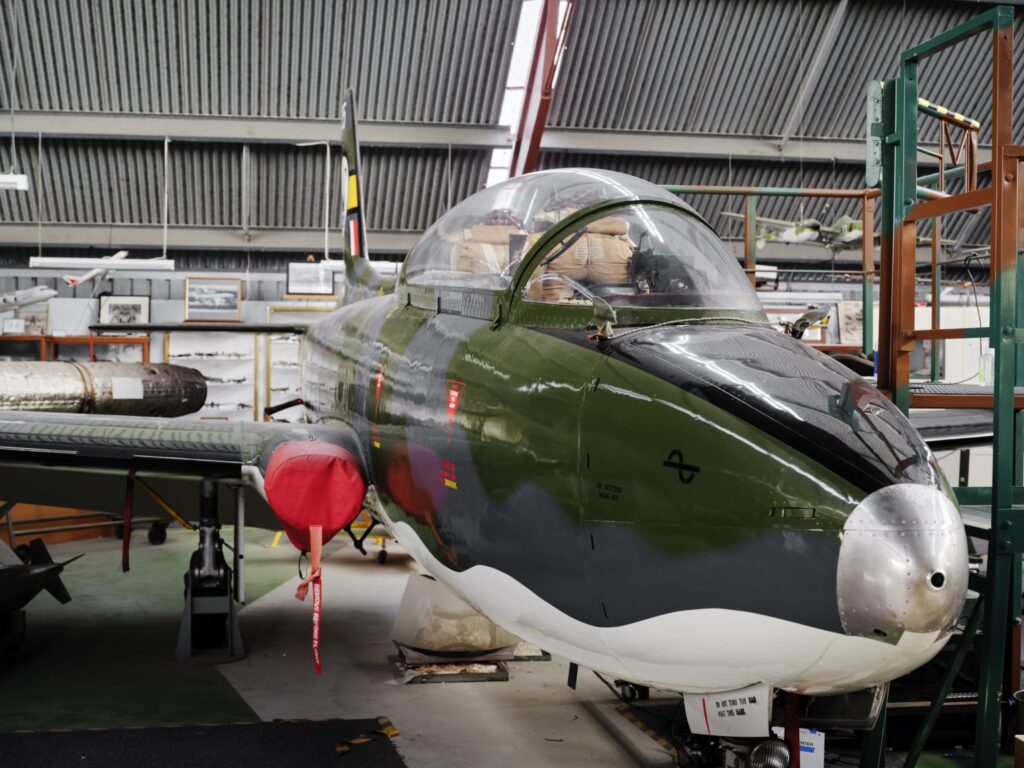
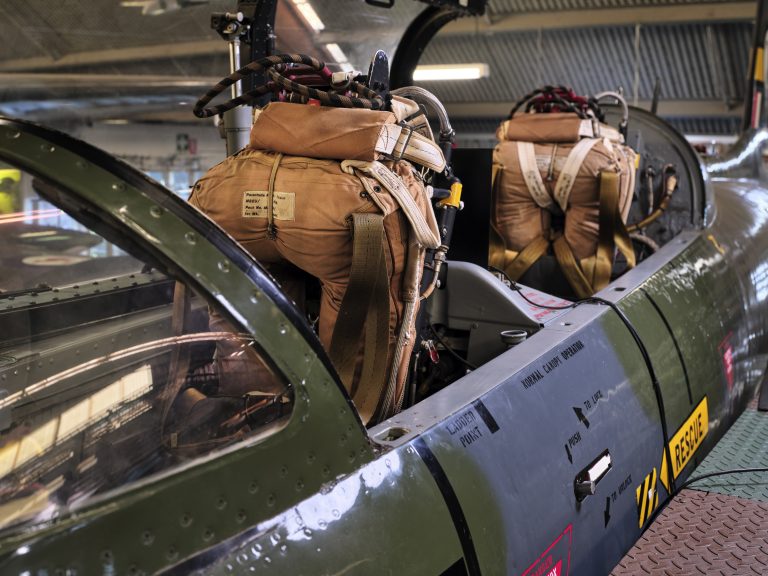
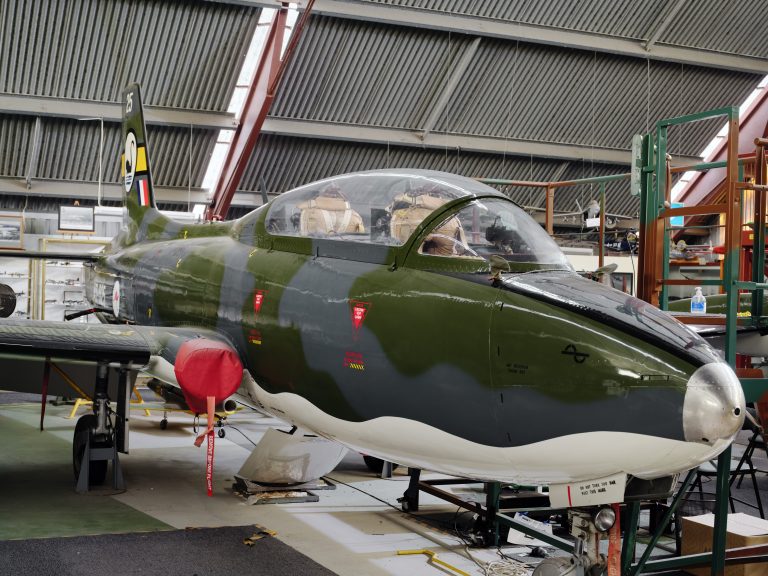
The MB‑326H on display at the Aviation Heritage Museum is serial A7‑066 that has been painted in the markings of A7‑025 to represent its service with No. 25 Squadron at RAAF Pearce. This Macchi MB‑326H once supported recruitment efforts, then was disassembled at Pearce, transported by road and reassembled inside the museum’s northern hangar.
Its two‑pack epoxy finish makes it one of the shiniest aircraft on display and a standout example of Cold War jet training history in Western Australia. Visitors can walk right up to the aircraft and see the details that shaped generations of RAAF pilots.
Take the Macchi Tour
The museum’s Macchi Virtual Reality experience lets visitors step into the pilot seat of an MB‑326H and fly through an immersive 3D world. The VR tour recreates cockpit controls, flight dynamics and panoramic views by offering a rare chance to handle the aircraft as a trainee pilot once did.
It’s a popular experience for school groups, aviation fans and thrill seekers who want a hands‑on feel for jet training. Step into the jet age with the Macchi virtual experience at Bull Creek today!

Visiting Information & Exhibit Highlights
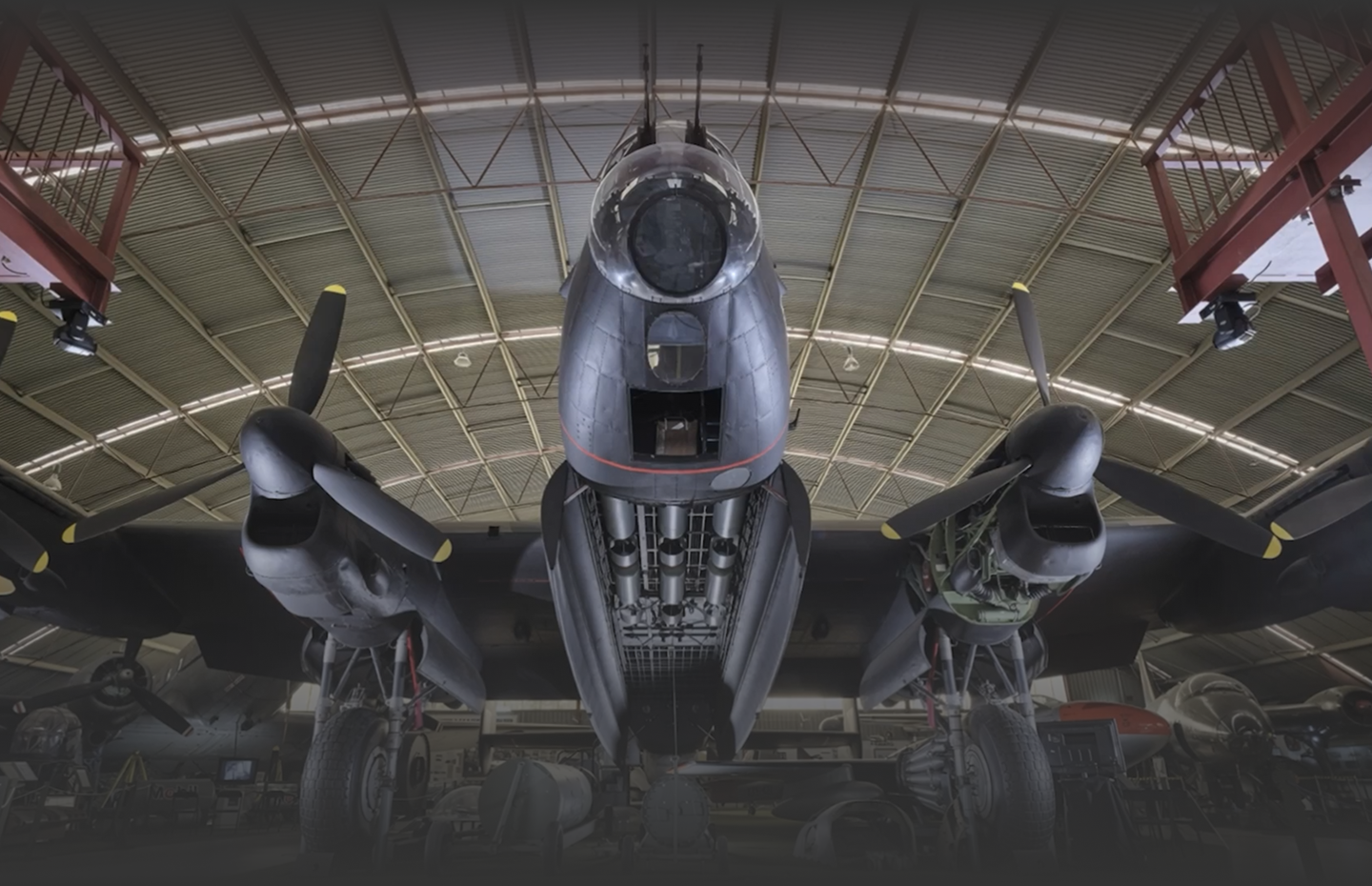
The Aviation Heritage Museum in Bull Creek is open daily with easy access for families, tour groups and aviation fans. Visitors can explore nearby exhibits that include the Spitfire, Dakota, Catalina and Lancaster to gain a full picture of Australia’s aviation history.
Guided tours, the Macchi VR experience and detailed displays make this one of WA’s most engaging heritage sites. Plan your visit to see the Macchi MB‑326H up close.
Frequently Asked Questions
The RAAF introduced the Macchi MB‑326H in the late 1960s after evaluating a small batch of Italian‑built aircraft. Once testing confirmed it was safe, reliable and well-suited to local training needs, Australia committed to large‑scale production and made the Macchi its primary jet trainer for more than three decades.