



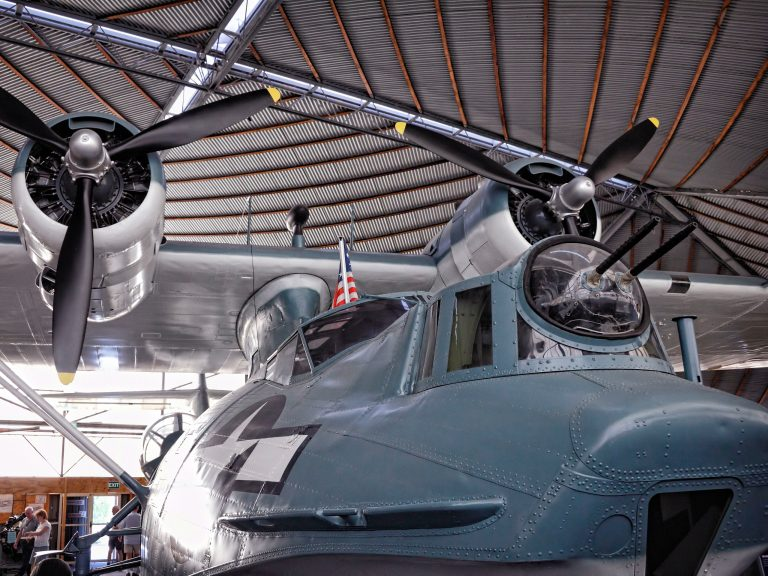
Catalina
What kind of aircraft could fly for 30 hours straight, land on water and carry out missions that no other aircraft could? The Consolidated PBY Catalina wasn’t built for glamour or speed, but it became one of the most important aircraft of World War II. With its long range and amphibious design, it flew across remote oceans on patrol, dropped mines in enemy waters and rescued downed crews from the sea.
Australia’s connection to the PBY Catalina runs deep. RAAF squadrons used it for coastal defence and night bombing raids across the Pacific, while Qantas crews flew the famous Double Sunrise missions between Perth and Sri Lanka — the longest regular airline route in history.
Today, the Aviation Heritage Museum preserves that legacy with a rare Catalina plane on display that offers visitors a glimpse into the endurance and quiet heroism of this extraordinary flying boat.
The Origins and Role of the PBY Catalina
First flown in 1935, the PBY Catalina’s history began as the Consolidated Model 28 in direct response to the U.S. Navy’s call for a long-range maritime patrol aircraft. What emerged was a twin-engine, high-wing flying boat that could land on open water, remain airborne for over 24 hours and operate far from traditional airbases. It was neither fast nor sleek, but its amphibious design and sheer endurance made it one of the most adaptable aircraft of its era.
During World War II, PBY Catalinas flew missions across every major ocean. In the Atlantic, they escorted convoys and tracked German U-boats. In the Indian Ocean, they provided reconnaissance and long-haul support. Across the vast Pacific, they laid mines in enemy harbours, conducted daring air-sea rescues and hunted enemy fleets. Their low stall speed and reliable range made them ideal for patrolling empty horizons and plucking downed pilots from remote waters — a quiet lifeline in a war defined by distance.
The PBY Catalina story came into focus as RAAF squadrons deployed them for long-range patrols, bombing raids and coastal defence. From Darwin to the Coral Sea, these flying boats became a key part of Australia’s wartime aviation effort by offering endurance, versatility and life-saving support when it was needed most.
Armament, Variants & Mission Capabilities of the Catalina
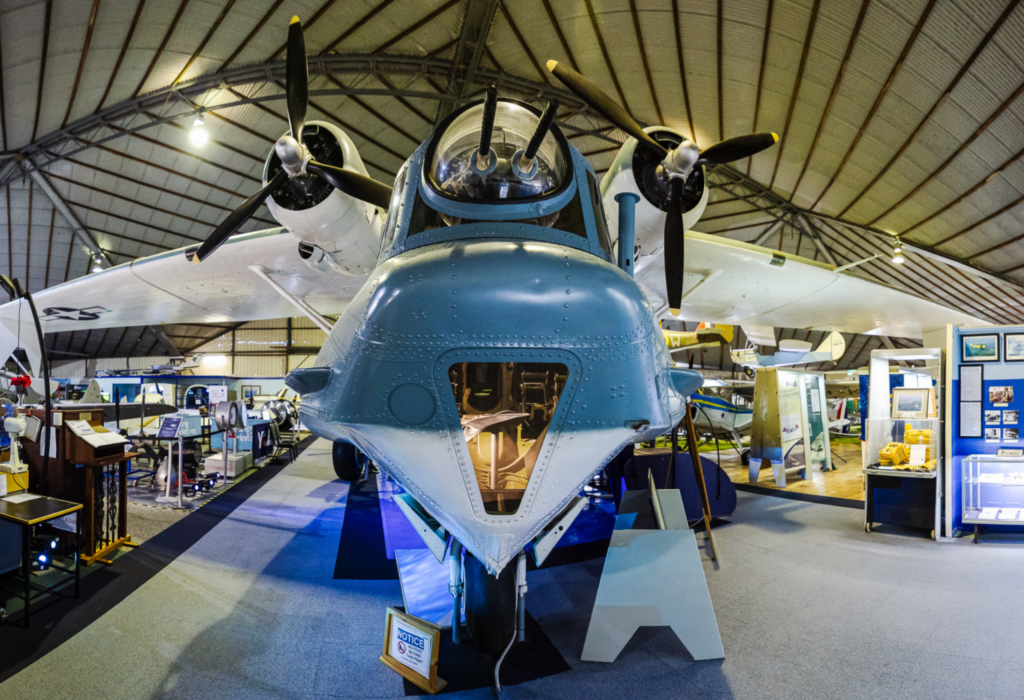
The PBY Catalina armament made this flying boat far more than a patrol aircraft. Armed with multiple .30 and .50 calibre machine guns across its nose, waist and tail, it carried depth charges, mines, bombs and even torpedoes. This combination allowed the Catalina to strike submarines, ships and coastal targets with precision while defending itself on long, isolated patrols. Though not built for speed, its range and firepower made it one of the most capable and feared maritime aircraft of World War II.
The aircraft evolved into a range of specialised roles throughout the war. The most important PBY Catalina variants included:
- PBY-5: Standard flying boat configuration used for maritime patrol and bombing missions
- PBY-5A: Amphibious version with retractable landing gear, flown by RAAF squadrons in the Pacific
- PBY-6A: Final wartime model with improved radar and tail armament
- Other configurations: Air ambulance, VIP/passenger transport, supply aircraft and air-sea rescue
PBY Catalinas flew some of the war’s most daring and unconventional missions. Black-painted “Black Cat” variants raided Japanese bases under the cover of night. Specially modified aircraft carried out the Double Sunrise flights, operating in complete silence over thousands of kilometres. Others dropped mines in enemy harbours, rescued downed pilots and scouted for naval fleets — proving the Catalina could adapt to almost any mission the Allies needed.
Key Specifications & Technical Details
The PBY Catalina dimensions and performance were tailored to the long-haul demands of WWII, where endurance and adaptability mattered more than speed. The aircraft was celebrated as being perfect for open-ocean patrols, rescues and night bombing missions.
Key PBY Catalina specifications and operational features:
- Empty Weight: 9,485 kg (20,910 lb)
- Loaded Weight: 16,066 kg (35,420 lb)
- PBY Catalina Wingspan: 31.7 m (104 ft) — a massive spread that improved lift, range and open-water control
- Height: 6.16 m (21 ft 1 in) — helped keep engines and cabin above water spray during landings
- PBY Catalina Length: 19.46 m (63 ft 10 in) — allowed for extended crew compartments and fuel storage
- Top Speed: 314 km/h (196 mph) — modest, but ideal for stable, fuel-efficient patrols
- PBY Catalina Engine: Two 1,200 hp Pratt & Whitney R-1830-92 Twin Wasp radial engines
- Range: 4,030 km (2,520 mi) — made it a transoceanic link when few aircraft could manage the distance
- Service Ceiling: 4,000 m (15,800 ft) — well-suited for low-altitude sea patrols
Explore the PBY Catalina at the Aviation Heritage Museum
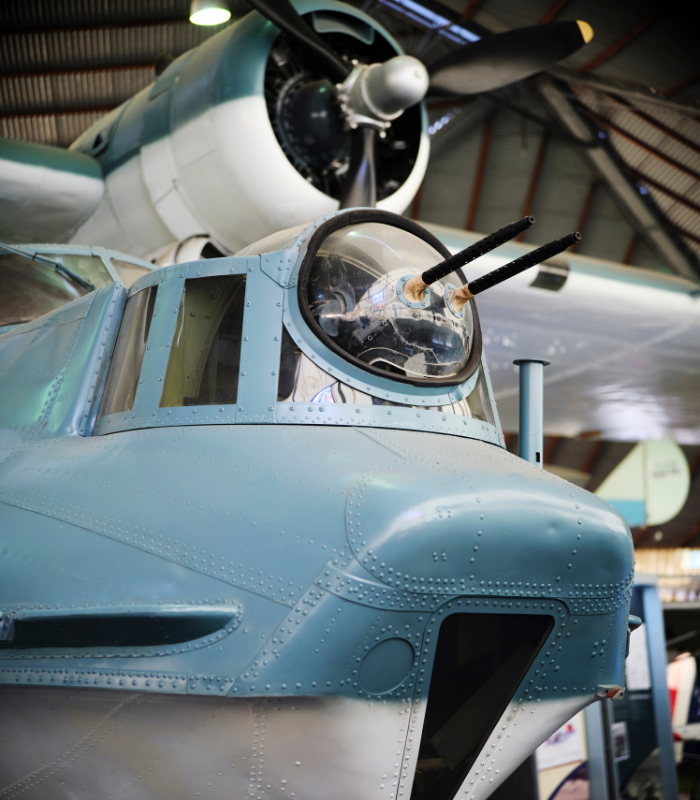
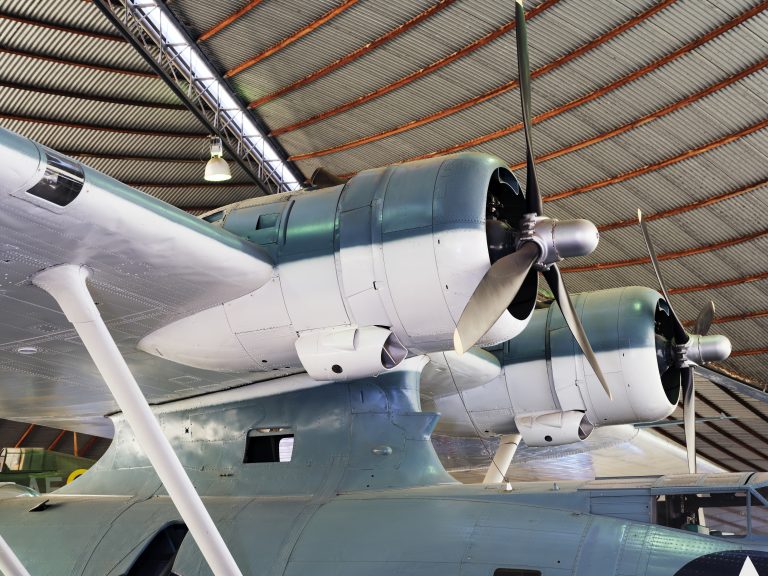
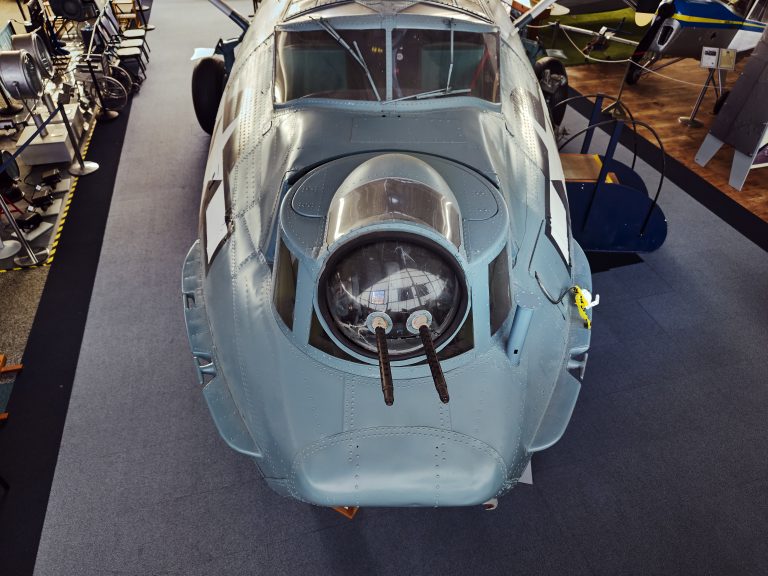
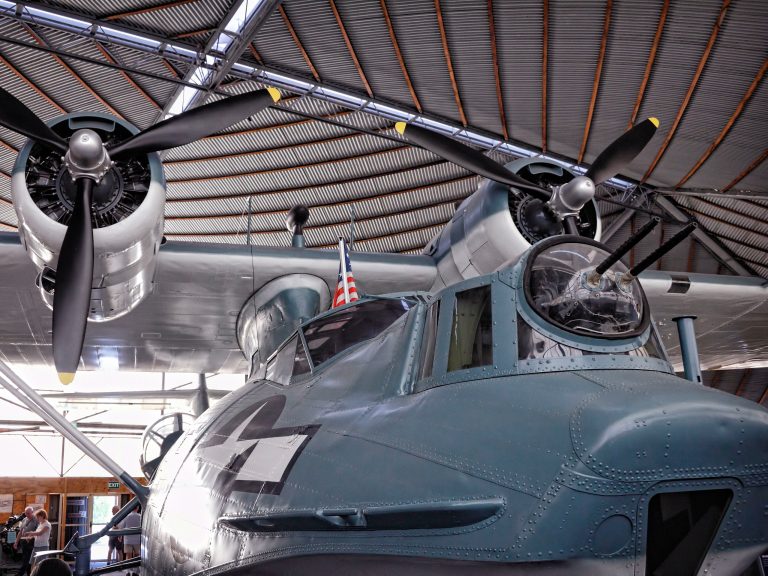
The Catalina plane on display at the Aviation Heritage Museum is a rare example of the PBY-5A amphibious variant. Preserved in remarkable condition, it features original markings, glass blisters, a nose turret and an iconic hull built for open-ocean patrols.
While this specific aircraft didn’t serve in Australia, it represents the critical role Catalinas played in RAAF operations. Visitors can view the aircraft up close and experience a living link to Australia’s maritime aviation story.

Inside the PBY Catalina
Inside the PBY Catalina interior, space was limited, and every inch served a purpose. The flight deck sat high in the nose, with side-by-side pilot seats, control yokes and basic navigation tools like compasses, altimeters and radios. Just behind, crew members worked and slept among fuel tanks, bunks and supply racks. Large bubble blisters near the rear gave gunners wide visibility, doubling as lookout points during rescue missions.
Life on board was tough. The crew endured deafening engine noise, bone-deep vibrations and the ever-present smell of fuel and sea spray. Long missions meant sharing bunks, rationing water and staying alert through entire nights over the open ocean.
If you were to take a step inside the PBY Catalina cockpit, you’d find yourself surrounded by cramped controls, gunner positions and the narrow walkways that defined every flight — a glimpse into the endurance, teamwork and resilience behind every mission!
Plan Your Visit to See the Catalina Up Close
Located in Bull Creek, Perth, the Aviation Heritage Museum is open daily with ticket options for individuals, families and tour groups.
The Catalina’s powerful PBY Catalina engine – the Pratt & Whitney Twin Wasp – is visible just above eye level and showcases an up-close look at what powered its record-setting flights. Measuring over 19 metres in length, the PBY Catalina’s size is a standout among the Museum’s collection that also includes the Spitfire, Lancaster and Dakota.
Frequently Asked Questions
The PBY Catalina has a wingspan of 31.7 metres (104 feet), giving it exceptional lift and range across long ocean patrols.